Before the lights even dimmed, the room was buzzing with chitchat from aunties and uncles, YB politicians, and drum troupe students shifting in their seats. On both sides of the proscenium, sponsor logos looped endlessly in a “ceremonial-banquet-style” vibe that felt worlds apart from the polished aesthetic of modern theatre. Then, as the house lights finally went down, someone started clapping. And there I was, so conditioned by contemporary theatre etiquette that I almost forgot that, in folk performances, applause before the show isn’t awkward at all, because it’s a gesture of respect. At this moment I realised there was a clash between the original “festive” mode of watching inherent to the Twenty-Four Festive Drums[1] and the highly codified setting of an opera house—a mismatch that set an intriguing tone for the entire evening.
So what happens when this physical-vocal embodied performative craft, rooted in the folk stage, finds itself inside the confined space of a national-level opera house? Does it take on a new cultural position, and how are its ethnic and folk qualities reshaped along the way?
More importantly, the mismatch reveals the structural tension that the Twenty-Four Festive Drums has long faced as a form of glocal cultural production.[2] On one hand, it has built up enough cultural energy within local (crosscultural) communities to step onto national and international stages. On the other, when the performance leans on contemporary theatre’s dramaturgical and technical syntax to reinforce its pre-existing Chinese symbolism, without pausing to reflect on how those symbols came to be, what their limits are, or how they might be reimagined in today’s multi-ethnic context, the narrative risks becoming rigid. In other words, as the drums are elevated to the heights of the opera house, they also confront an unavoidable question:
Are we meant to see them as a grand showcase of the Chinese community’s cultural totem, or can we recognize them as an embodied craft still evolving across boundaries in Malaysia?
Drum Up JB: Cultural Engineering and City Branding
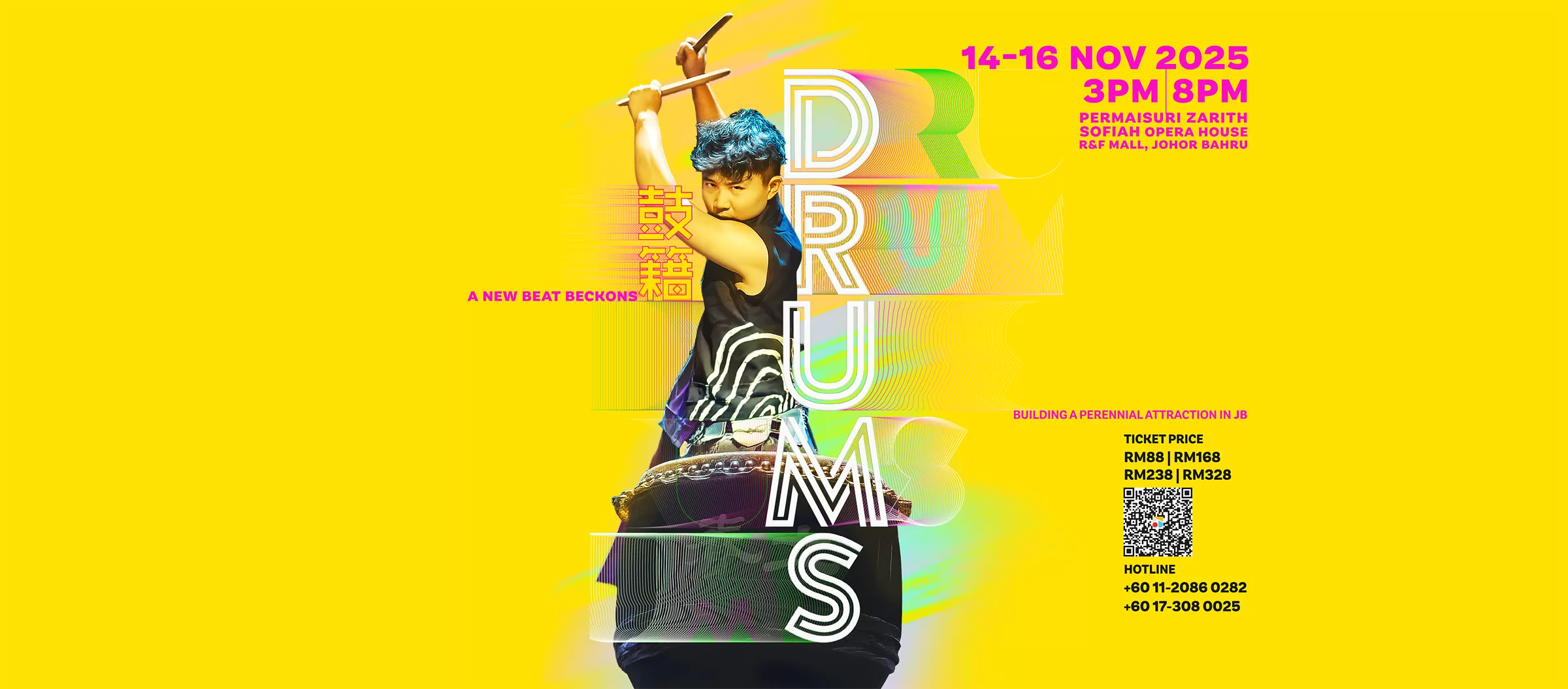
Launched in 2023 by JB Drums and Orang Orang Drum Theatre, the “Drum Up JB” (鼓动新山) initiative positions itself as a driving force for the contemporary development of the Twenty-Four Festive Drums, and has recently announced its ambition to go global, establish a resident performance, and pursue the UNESCO Intangible Cultural Heritage status. Within this framework, Drums: A New Beat Beckons (2025) has emerged as the project’s evolving centerpiece, shaped and refined over time. The program booklet[3] repeatedly emphasizes phrases like “blending tradition and innovation,” “expanding the audience base,” “creating cultural landmarks,” and “stimulating the creative economy.” It’s obvious that simply being an art form is no longer enough for the Festive Drums, as they’ve begun to function more eagerly as symbols of (Johor Bahru’s) city branding, (Sino) cultural diplomacy, and the (national folk arts) cultural industry.
The project’s narrative is structured as a linear progression: the origin of the Twenty-Four Festive Drums in 1988 is woven into a century of local memory. The 18 performances in 2023 laid the groundwork; in 2024, theatre director Yeo Lyle(蔡德耀) was invited to reimagine the narrative; by 2025, “Drum Up JB” was formally established, and the troupe hopes to become, in 2026, the first resident act at the Permaisuri Zarith Sofiah Opera House, creating Malaysia’s first long-term Twenty-Four Festive Drums-themed program. This “milestone” narrative is set to recast the drums from their roots in community, ritual, and education, transforming them into the core of a city’s cultural identity and placing them within a theatre space shaped by transnational capital—a new political and economic position.
Within this structure, Drums: A New Beat Beckons (2025) plays a very clear role. It is seen as a new narrative model for the Festive Drums, bridging over thirty years of history and reaching toward a global audience. As a vessel for stories of resilience and migration, while it carries the narratives of “century-old heritage” and “community memory,” it was steadily being integrated—from “Twenty-Four Solar Terms”[4] to de-diasporic local dialects, from drum formations to contemporary identity storytelling—into a set of cultural symbols representing Johor Bahru, Malaysia, and even the international sino culture stage. This narrative is emotionally compelling, but it also means Drums: A New Beat Beckons (2025) shoulders a dual mission from the beginning:
To continue the origin story of the Chinese community, and also be packaged as a ‘new’ beat for a multicultural environment.
It’s worth noting that the project documents are filled with terms related to cultural governance and industry management, such as “permanent cultural landmark,” “creative economy,” “job opportunities,” “brand exposure,” “international tourists,” “immersive experience,” and “community workshops.” These already signal that the aesthetic position of the Festive Drums is now being redefined by larger forces of capital, cultural governance, and discursive power. The drums are no longer just a collective skill practiced in schools or associations, as they have (always?) been incorporated into a framework of urban cultural renewal and cultural diplomacy. This shift places the Festive Drums in a highly managed, sustainable, and reproducible cultural ecosystem, subtly shaping new dynamics around “whose culture gets represented” and “whose culture is expected to become a national symbol.”
Within this context, Drums: A New Beat Beckons (2025) serves as the flagship work of the project, carrying both historical narrative and cultural branding responsibilities. Audiences simply cannot separate the performance from the broader cultural movement it was set to represent. As the performance is embedded within a clear policy vision and cultural strategy, how it handles core issues like tradition, ethnicity, diversity, and Malaysian-ness becomes not just an aesthetic choice, but a matter of cultural politics.
The Cultural Narrative and Ethnographic Opening of Drums: A New Beat Beckons
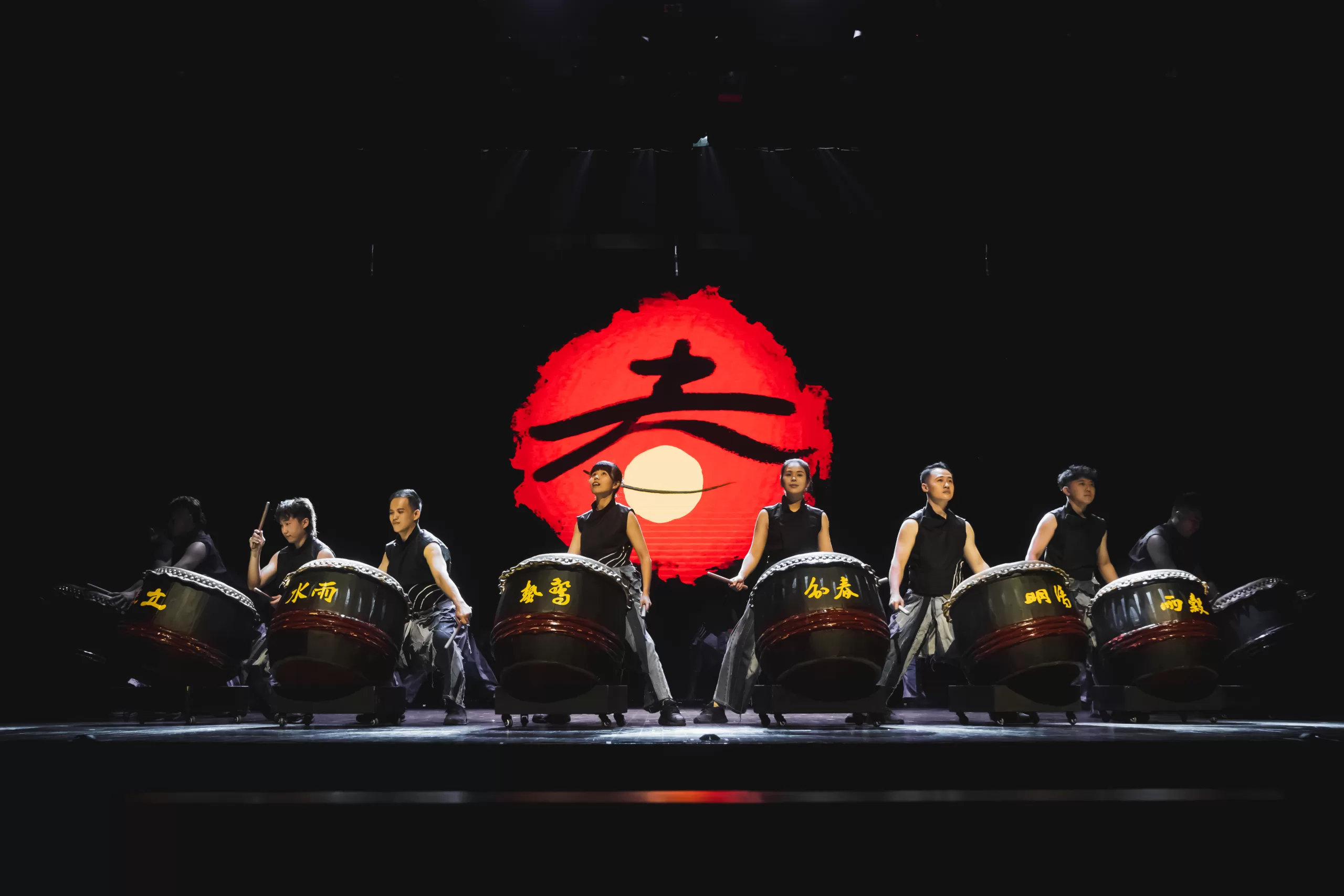
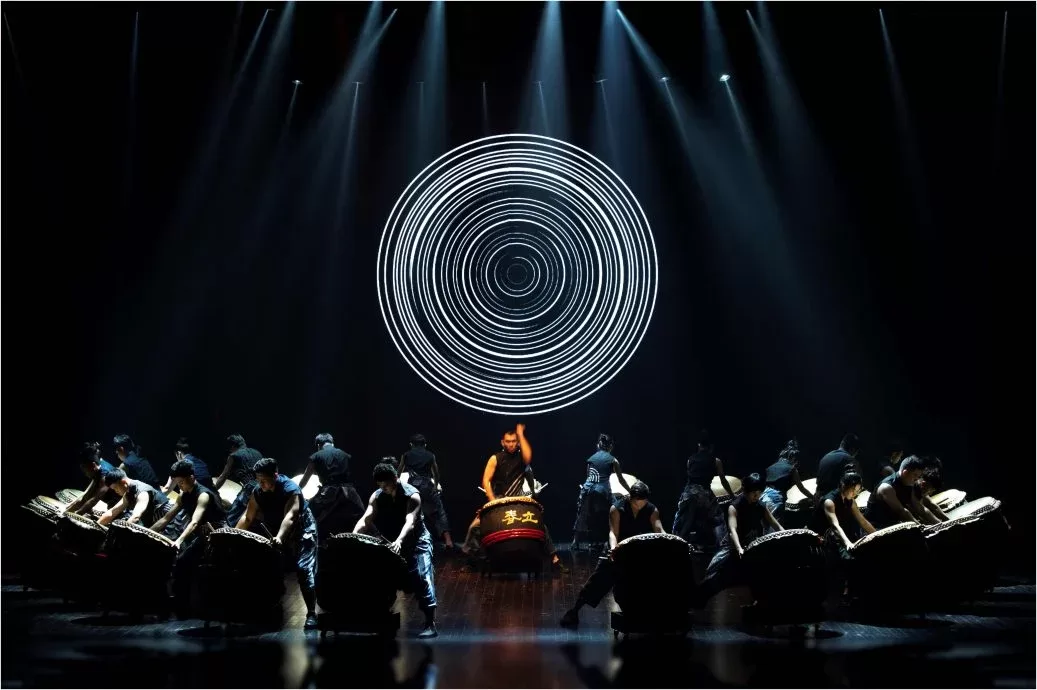
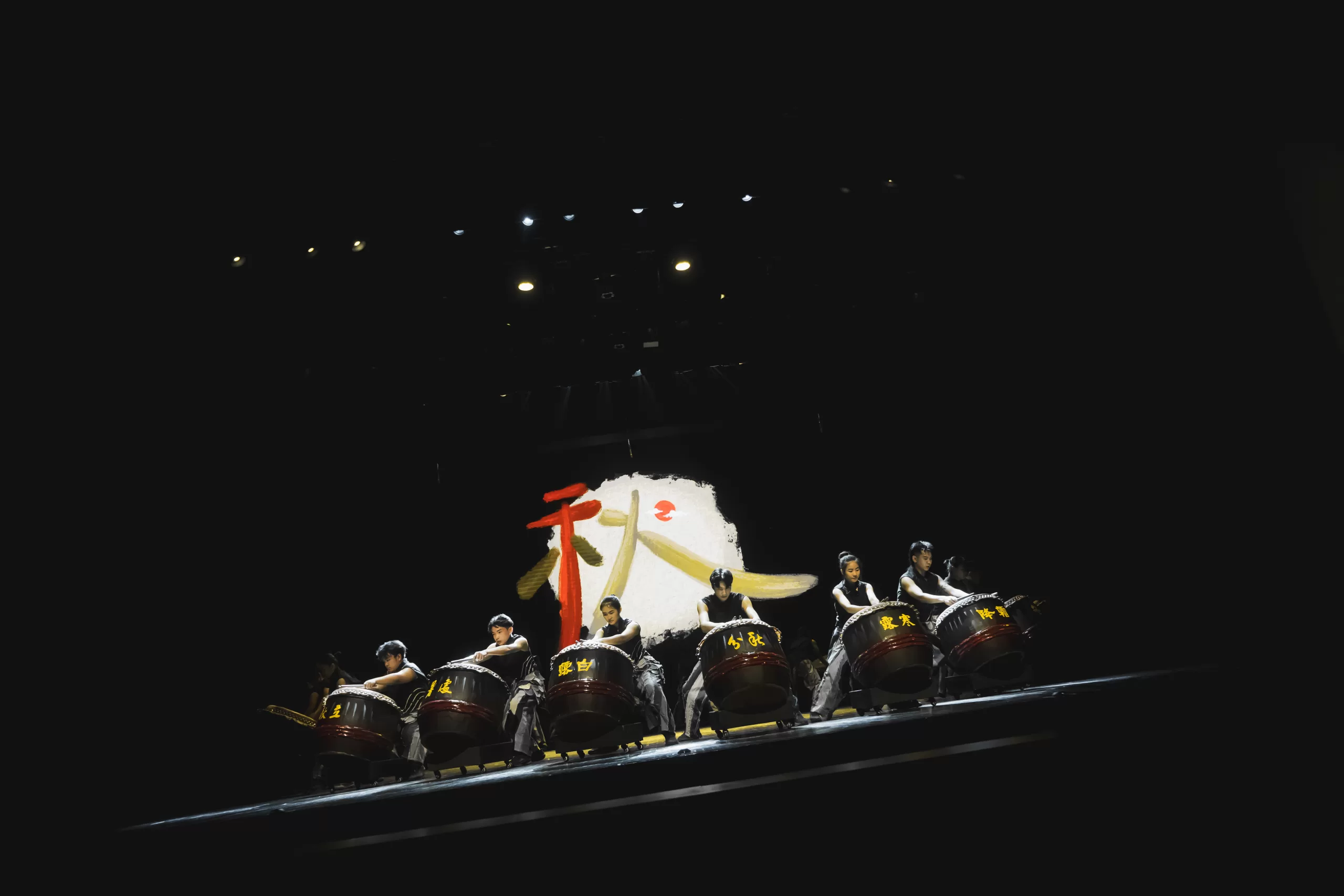
As the first beam of light pierces the darkness, a nameless drum, sounds a weighty strike, marking the very moment the early settlers set foot on this tanah. Recital of chronicle, vibration as evocation; a single, unadorned beat, the opening scene mightily reconstructs the arrival and anchoring of Chinese migrants in this land. One by one, drum by drum, the drummers enter, tracing a circle along the edge, rotating clockwise, moving and breathing, beat—as each drummer rotates to the centre front, drum is turned, the names of the corresponding solar terms are revealed—unhurriedly lifting their gaze towards audience, each recital in their own dialect, where “lineage,” “energy,” and “voice” weave into a sentient tapestry. Back-screen: the rings of a tree ripple outward, a distinctly ethnographic visual language binding together the cycles of season, labor, and migration—distilling the cultural lineage of the Festive Drums into the simplest of symbols, a circle. In which the cultural sequence of the drums is rendered linear, visual, and theatrical, transforming tradition into a living, breathing stage apparatus.
This opening structure immediately brings to mind Lin Hwai-min’s Legacy (1978), which depicts the pioneering journey of early settlers across the Black Ditch, using dance and ritual theatre to conjure a collective nation’s origin. Drums: A New Beat Beckons (2025) follows a similar logic: the changing of the seasons, the waxing and waning of moon and sun, and the shifting drum formations all exemplify the cycles of agricultural labor, constructing a narrative of “ancestors toiling, descendants flourishing.”
Yet even though the imagery is effective in expressing symbolic intent, the giant back-screen upstage has exposed its own structural limitations. It remains a flat backdrop, never truly interacting with the drum formations in a three-dimensional manner, and is ultimately reduced to a functional “background board.” Whenever the narrative loses momentum, the projection “by default” becomes a technical obligation to “enhance” the inadequacy of the embodied act. The visuals are certainly grander than those of a typical Twenty-Four Festive Drums performance we often see in malls or festival celebrations, but I believe there are better ways to handle the three-dimensional tension between drum, body, and space. The lighting suffers from a similar issue, as most effects remain functional by merely emphasizing the drum array, intensifying the color palette, heightening the sense of festivity but rarely engaging with rhythm, space, or emotional development.
Of course, the heart of the Twenty-Four Festive Drums lies in drumming, formations, and embodied memory—not in flashy lighting or video effects. The problem isn’t that these elements aren’t spectacular enough, but that they haven’t been fully integrated into the rhythmic logic of the drums to “fit into” the “theatrical” language. In some ways, this shows that cross-media vocabulary has yet to truly permeate the internal structure of the Festive Drums; or perhaps the deeper issue isn’t technical at all, but spatial?
When the Festive Drums, as a complete entity, is placed in an opera house—rather than having their individual sonic elements integrated into a larger musical landscape—can such a highly regulated venue truly accommodate a collective bodily craft that originated from the outdoors, in plazas and festive settings?
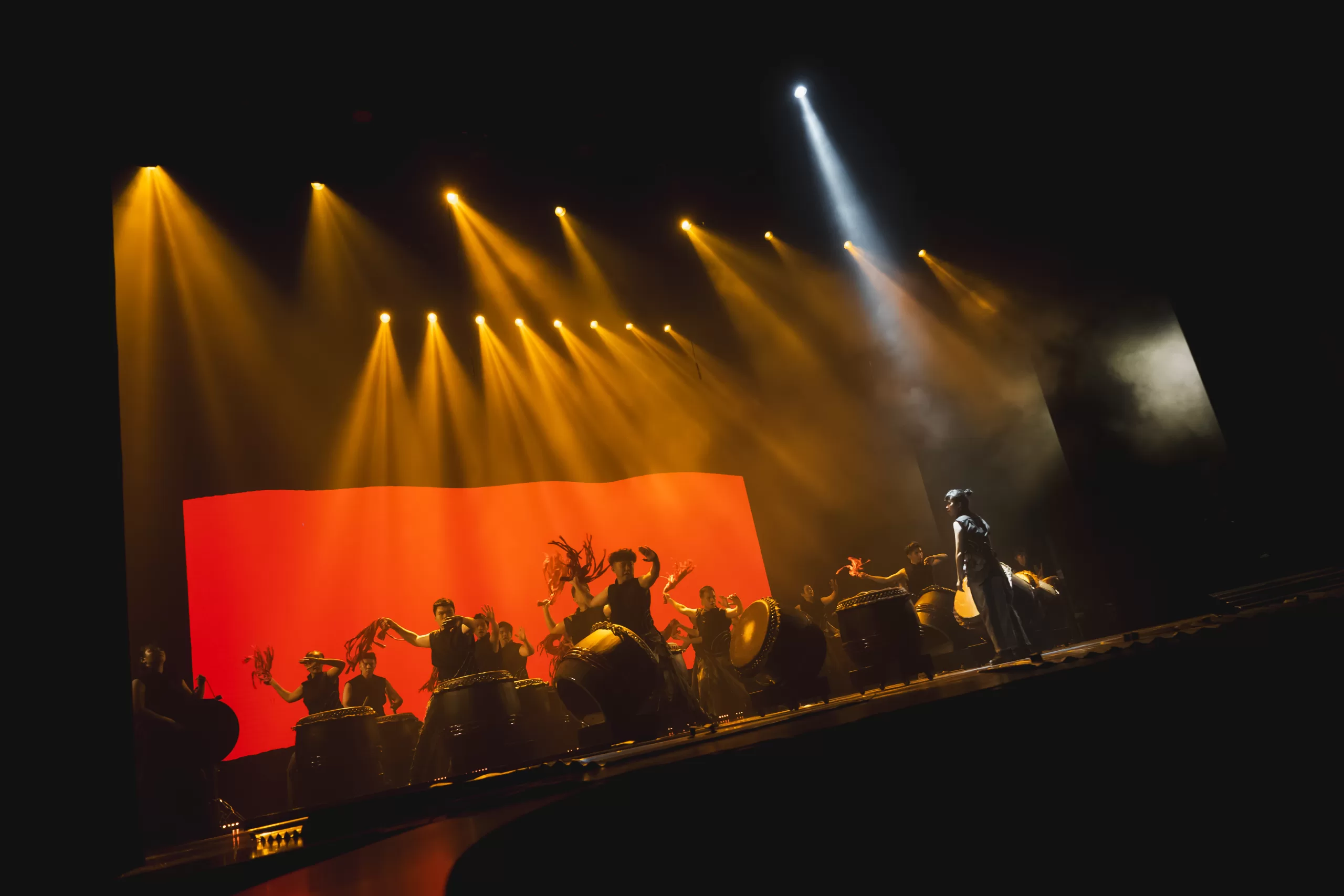
The Challenge of Integrating the Twenty-Four Festive Drums and Theatrical Language
Drums: A New Beat Beckons begins with the collective experience of early migrants, establishing a mature narrative stance. The opening sequence, where each drummer introduces themselves in a clockwise fashion, sets up a clear “cultural origin story.” Drummers announce the names of the solar terms and their drumming techniques in their native dialects, creating a highly readable scene through steady rhythms and distinct symbols. This does serve as an introduction for audiences unfamiliar with the Twenty-Four Festive Drums, and also clearly distinguishes the cultural layers between “jieling (节令)” and “jieqi (节气)”.[5] The various ways the drumsticks strike the drum-body are translated into post-migration bodily adjustments, continuing the tradition of embodied ethnography that has always characterized the Festive Drums, and demonstrating the work’s solid grounding in its own narrative logic.
As the established patterns loosen, the flow of drumming—marked by a pause, such as a “,” comma sign—signals the start of a new chapter. The narrative perspective begins to move beyond a single ethnic framework, exploring a more open imaginative space. Traditional geometric formations dissolve, giving way to arrangements that are more multifaceted, variable, layered, diverse, and multidirectional; rhythms shift from uniformity to individuality and organic flow. Lighting and stage design make these variations visible, and the interplay of visual and auditory elements adds new layers of resonance to the once-uniform drumbeats. This tanah, once a rumah of early settlers, now becomes the tanah air for their descendants.
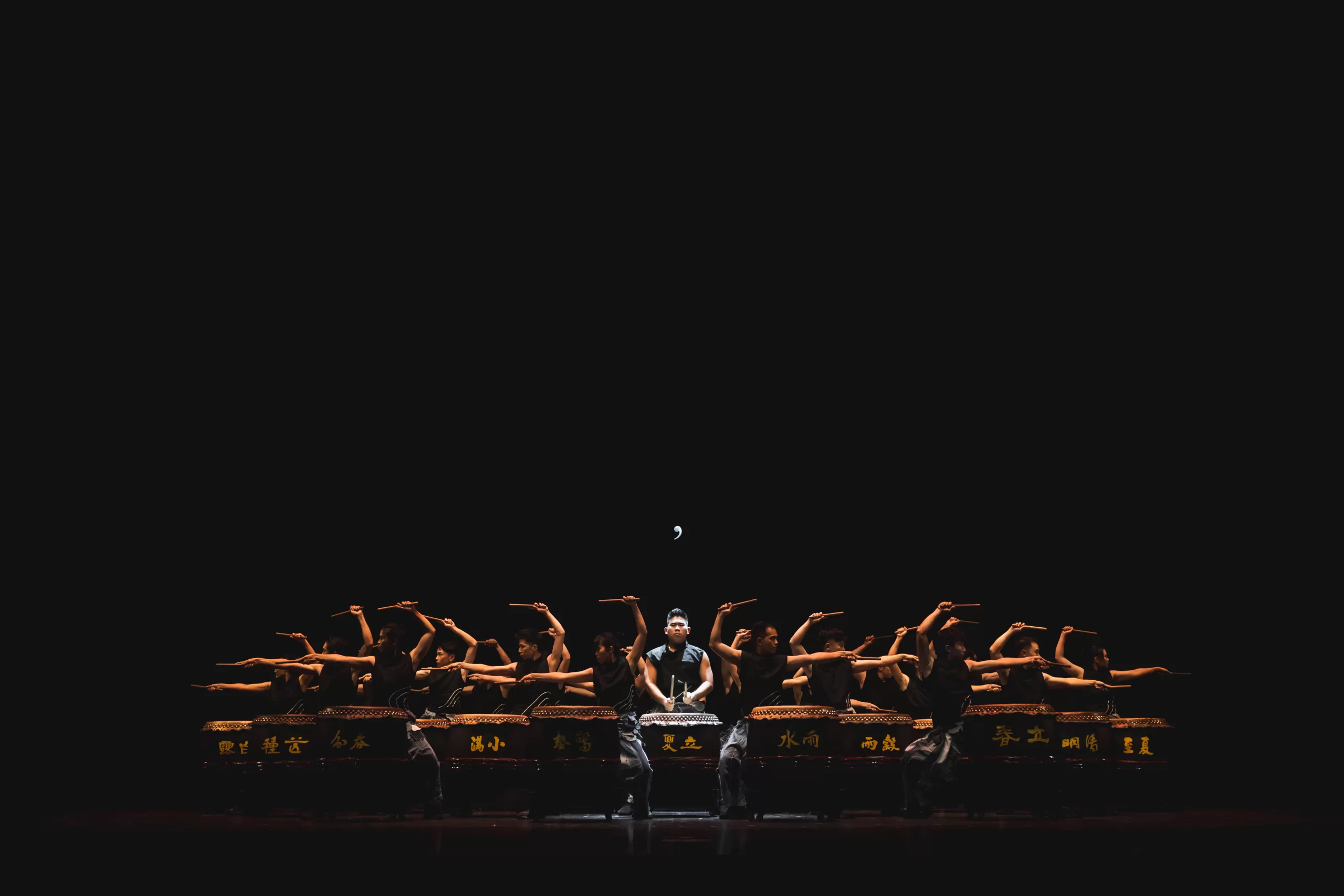
Then, with a “.” full stop, the narrative shifts toward nation-building. In this segment, the work uses strong symbolic gestures to reconstruct key historical moments: Malayan independence, the formation of Malaysia, interethnic encounters, and the loosening of national borders. The sound of the Festive Drums begins to blend with Malay and East Malaysian musical elements—gamelan, kompang, gendang, and even the mysterious Asian jaw harp. The orchestra pit rises as the official arrival of a “national construct”; drummers don more colorful costumes and even perform the Murut bamboo dance, magunatip, on stage, pushing the atmosphere to a climax. The pengawai2 sitting beside me, who I speculate had been “dragged” to the show, also unconsciously tap their feet. Is this a sign that the expected effect of Muhibbah had worked? The work successfully shifts the focus from “drum” to “body,” achieving a “cultural resonance” through the shared vibration of bodies and voices.
Yet it was amid this celebration that we should consider a deeper “interrogation”:
The integration of cross-ethnic (cultural) sounds in rhythm and a single-ethnic body language may feel seamless, but when the surface-level harmony is so easily “achieved”, where have the softened or overlooked historical frictions and power imbalances gone?
Within the framework of national cultural selection and governance, the familiar perpaduan kaum narrative is repeatedly presented in many highly harmonious forms. Does the smooth collage presented in this segment of Drums: A New Beat Beckons inadvertently endorse this “expected harmony”? Or should we re-examine how the Festive Drums’ collective memory is re-written, re-displayed, and re-situated when summoned in a national discourse?
This question becomes even sharper in the following scene, which presents a “bloody history.” The audience, having just experienced jubilation, is suddenly plunged into a scene of violence, the emotional contrast heightened for shock but lacking sufficient historical reflection. Although the work intends to show that “multicultural coexistence inevitably involves friction,” its histrionic language and narrative strategy rely too heavily on stagecraft and visual spectacle, compressing what could have been a powerful examination of the cross-ethnic issue into a merely symbolic historical fragment.
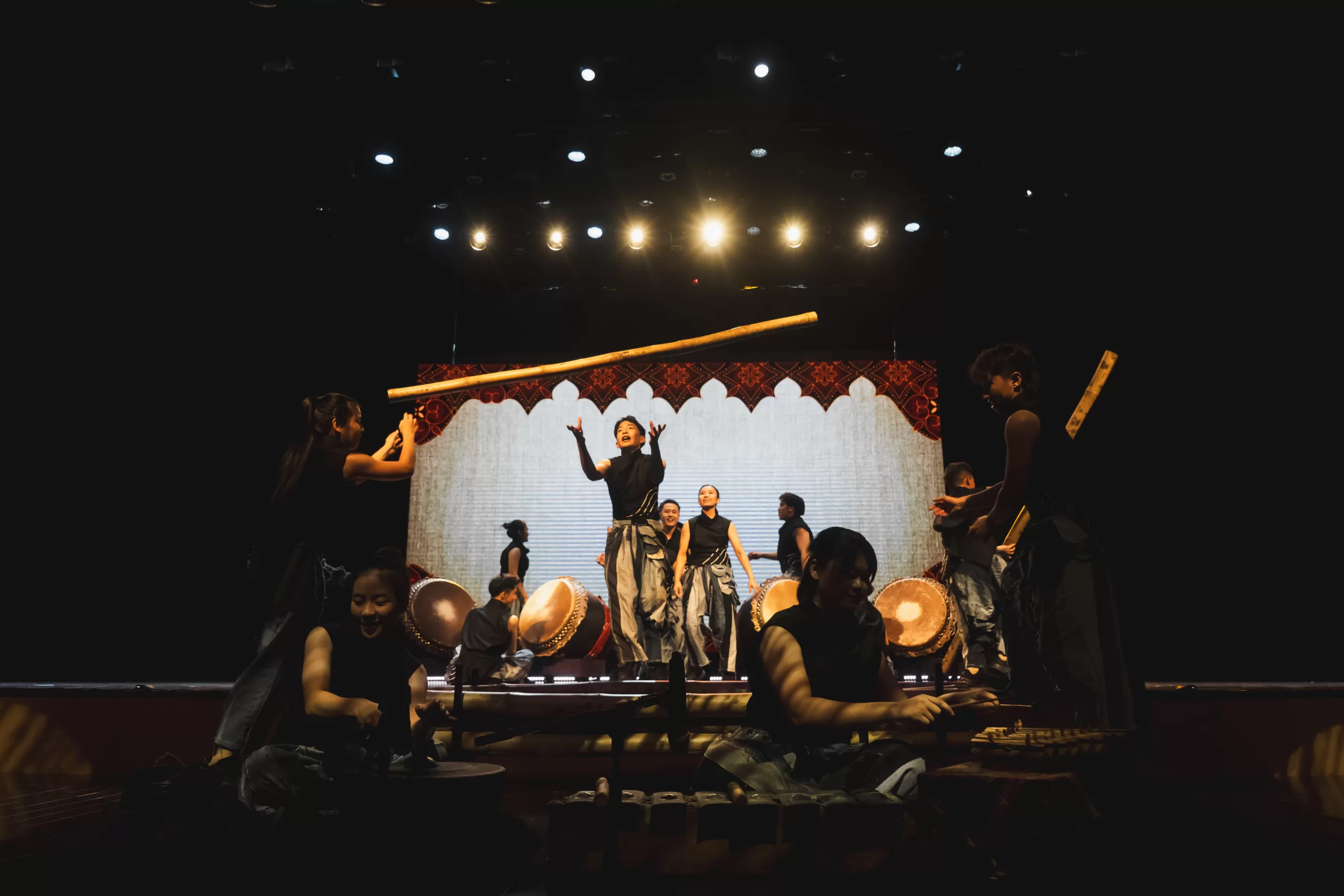
Multi-Ethnic Narrative, Nation-Building, and the Pitfalls of Cultural Harmony
Speaking from a theatrical language perspective, Drums: A New Beat Beckons has clearly moved away from the structure of commercial performance and toward the aesthetics of contemporary theatre, actively revisiting and reorganizing the core issues of contemporary Malaysian Chinese cultural discourse. Yet once the Festive Drums enter the theatre’s framework, a certain tension naturally arises between their “ethnic” and “contemporary” qualities. The criticality, reflexivity, and constant renewal of vocabulary demanded by modern theatre do not necessarily conflict with the Festive Drums’ long-cultivated aesthetics of exuberance, collective emotion, and outward expression, but how can these two sensibilities truly resonate with each other? This remains an open question. Perhaps, then, the pauses and gaps in the work’s multi-ethnic narrative should be seen as an inevitable stage in its ongoing transformation.
The use of dossiers, paper rods, and digital textures clearly attempt to respond to the realities of informatization, globalization, and the post-nation-state context; unfortunately, these new media eventually return to the established rhythms and matrices of the Twenty-Four Festive Drums. Does this suggest that the Drums’ own grammar possesses a certain inertia, requiring more time to generate new vocabularies in response to contemporary challenges? Or, when we speak of a “new beat” for the 21st century, should we imagine it as a transformation from within the existing system, or as a search for a more radical narrative breakthrough?
If the first four sections unfold the history of ethnic groups, cultural variations, and nation-building in a relatively linear fashion, the fifth section—intended as a “contemporary stance”—appears looser, perhaps reflecting the reality that our generation is still searching for its footing. In other words, those moments of emotional “slackness” are not necessarily narrative missteps, as they may well be the genuine dilemmas faced by contemporary Malaysian Chinese culture as it navigates transnational, multi-ethnic, multi-media, multi-lingual, and multi-identity contexts. Within the existing bodily grammar of tradition, how much new perception and new narrative possibility can we still open up?
In this sense, Drums: A New Beat Beckons(2025) raises more questions than it answers:
Are the Festive Drums a collective cultural symbol of the Chinese community?
Are they a bodily memory that sustains identity amid diasporic history?
Are they a cultural asset for national diplomacy?
Or do they need to be deconstructed and repositioned as a contemporary Malaysian embodied art?
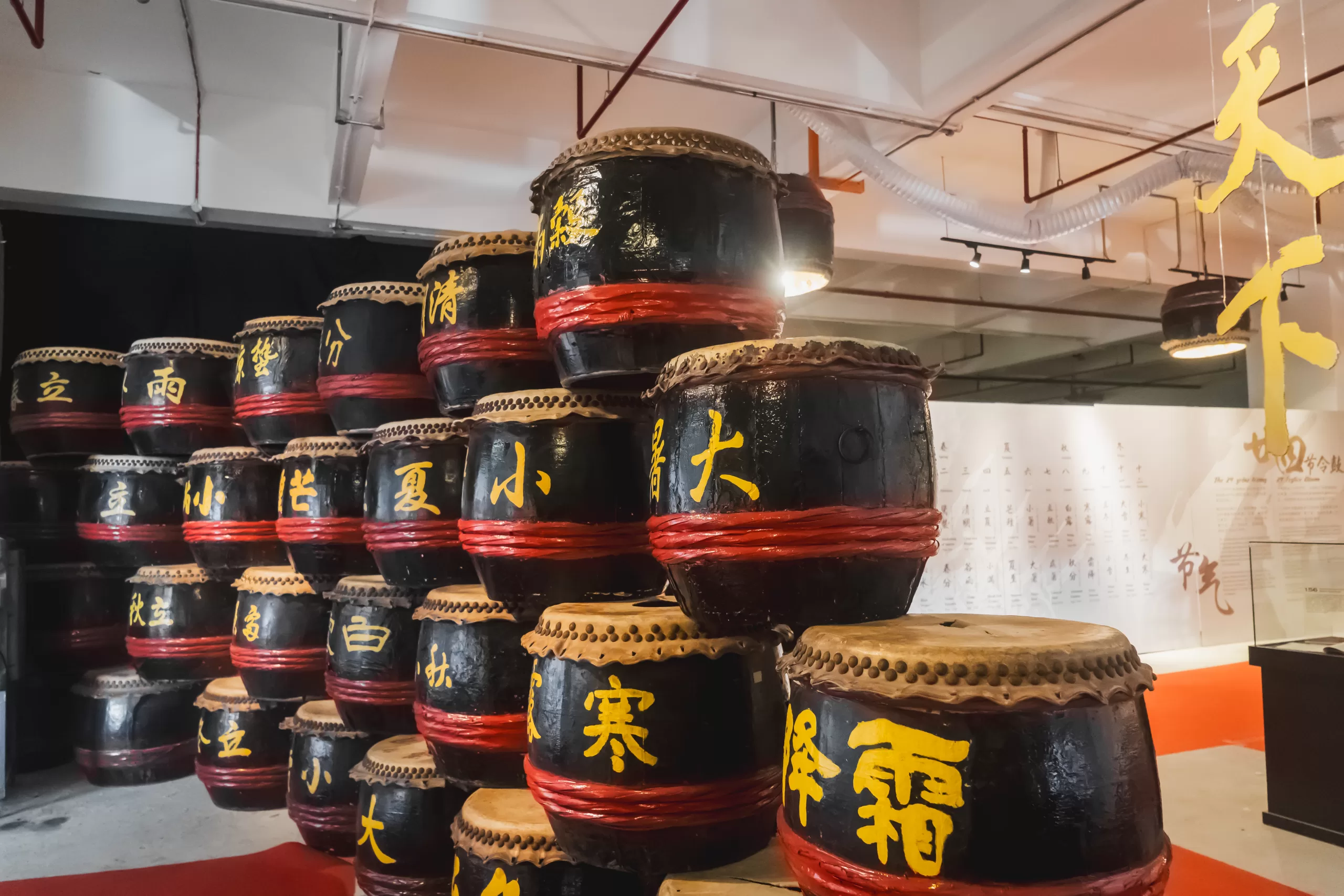
The Possibilities and Risks of UNESCO Inscription
Within the development of the Twenty-Four Festive Drums, the application for UNESCO Intangible Cultural Heritage (ICH) status is no longer about “rescuing an endangered art.” Perhaps a concern could be: once a vibrant cultural practice is elevated to the status of international heritage, how will its power dynamics, narrative position, and future trajectory be re-organized?—as the Festive Drums are a classic example of a glocal cultural production, which is rooted in Malaysia’s multi-ethnic society, and is highly portable across borders. Their vitality has always come from educational systems, community networks, and cross-disciplinary creativity, never from official recognition alone.
UNESCO recognition inevitably grants the Festive Drums greater symbolic capital, transforming them from “collective training in schools and associations” into a “nationally representative cultural asset.” At the same time, it means that the Drums will be drawn deeper into the realm of national cultural governance, subject to regulation, management, and institutional scrutiny. This shift is not necessarily negative; as it means the Drums’ future development will move from “growing organically” to “growing under observation, evaluation, documentation, and imagination,” thus, requiring greater public oversight and cultural self-awareness.
However, UNESCO inscription often brings several structural risks:
- Overemphasis on Authenticity: Tradition may become fixed as a single model, compressing the rich diversity of local styles and variants (as seen with Korea’s Talchum, where a “standard version” dominated after inscription causes the marginalization of local troupes). As Barbara notes, ICH inscription often turns living culture into “displayable heritage” rather than a continually evolving practice.[6]
- Touristification and Spectacularization: Performances may shift from lived practice and community ritual to “cultural display” for external audiences. For example, after Balinese dance was inscribed, “tourist-oriented” versions gradually replaced religious or community contexts.[7]
- Concentration of Representational Power: A small group recognized as “community representatives” or “official troupes” may gain privileged access to negotiations with national and international bodies, marginalizing long-term practitioners. In Japan, the Nōgaku system for Noh theatre became the main interface for UNESCO, while local or ritual Noh practices lost visibility. This redistribution of cultural power is a structural risk of ICH, as Hafstein has warned.[8]
Fortunately, looking at the development and current reality of the Twenty-Four Festive Drums, there are reasons to believe these risks can be avoided:
- No Fixed “Traditional Style”: Since their founding in 1988, the Twenty-Four Drums has always been defined by innovation, freely combining calligraphy, formations, drumming techniques, bodily training, and local vocabularies. As long as the heritage narrative does not enshrine a single version as “the” representative one, the diversity of variants in the present educational system will not be compressed.
- Community Roots: The Festive Drums’ foundation lies in secondary school education, Chinese school associations, and regional youth groups. Their main energy is in training and local activities, not in performances designed for external audiences. Their vitality depends on ongoing bodily transmission, not the tourism economy. As long as the proposed future residencies and international showcases do not hollow out their communal function, this art craft is unlikely to slide into a purely “tourist-oriented” aesthetic.
- Decentralized Transmission: Festive Drums’ history is marked by a relatively dispersed network of transmission. While future heritage applications will require one or a few organizations to represent the Drums to UNESCO, there is currently no Noh-style “iemoto” system or single authority monopolizing interpretation. The cross-school, cross-region, and cross-language context of the Drums makes it difficult for cultural power to be centralized. Even though professional creative drum troupes like Orang Orang Drum Theatre and HANDS Percussion have always been creatively influencing and encouraging each other, they do not monopolize legitimate interpretation, allowing the Festive Drums to remain open in bodily vocabulary, theatrical form, and cultural discourse. This openness has, in fact, fostered more diverse directions for innovation.
This means that, at present, the UNESCO title does not pose much of a risk of co-optation; rather, it might actually become an opportunity for the wider public to reimagine the cultural position of the Twenty-Four Festive Drums. The key lies in whether the application’s narrative can maintain sensitivity to the Drums’ plurality, cross-cultural nature, and local cultural consciousness. If during the process of institutionalization, we can also remember to preserve its original openness, its vitality as a glocal cultural production will not be diminished, and will instead gain greater international visibility and allow its cultural value to be continually created and reimagined.
Language Politics, Performance Space, and the Structural Issues of Resident Performance
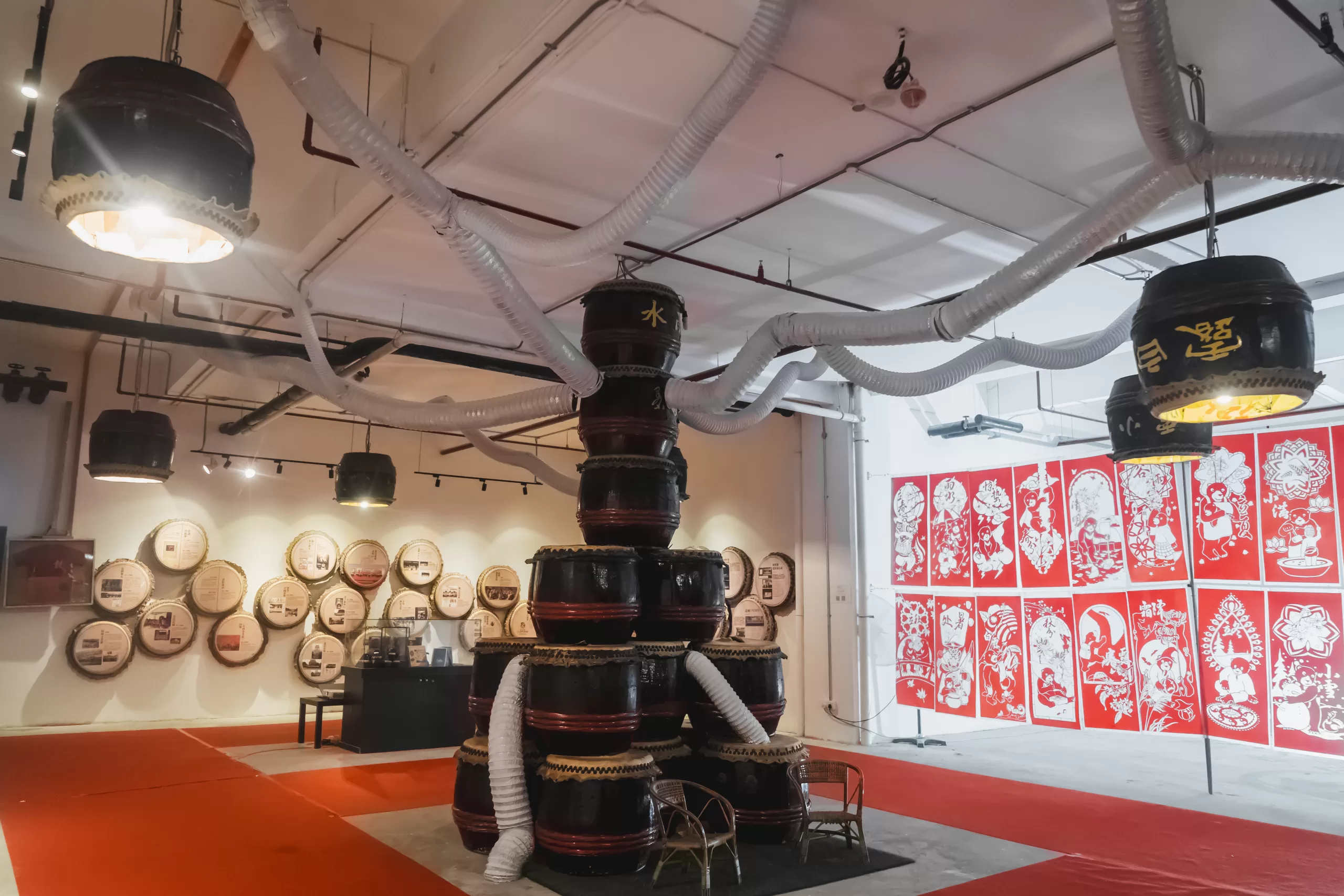
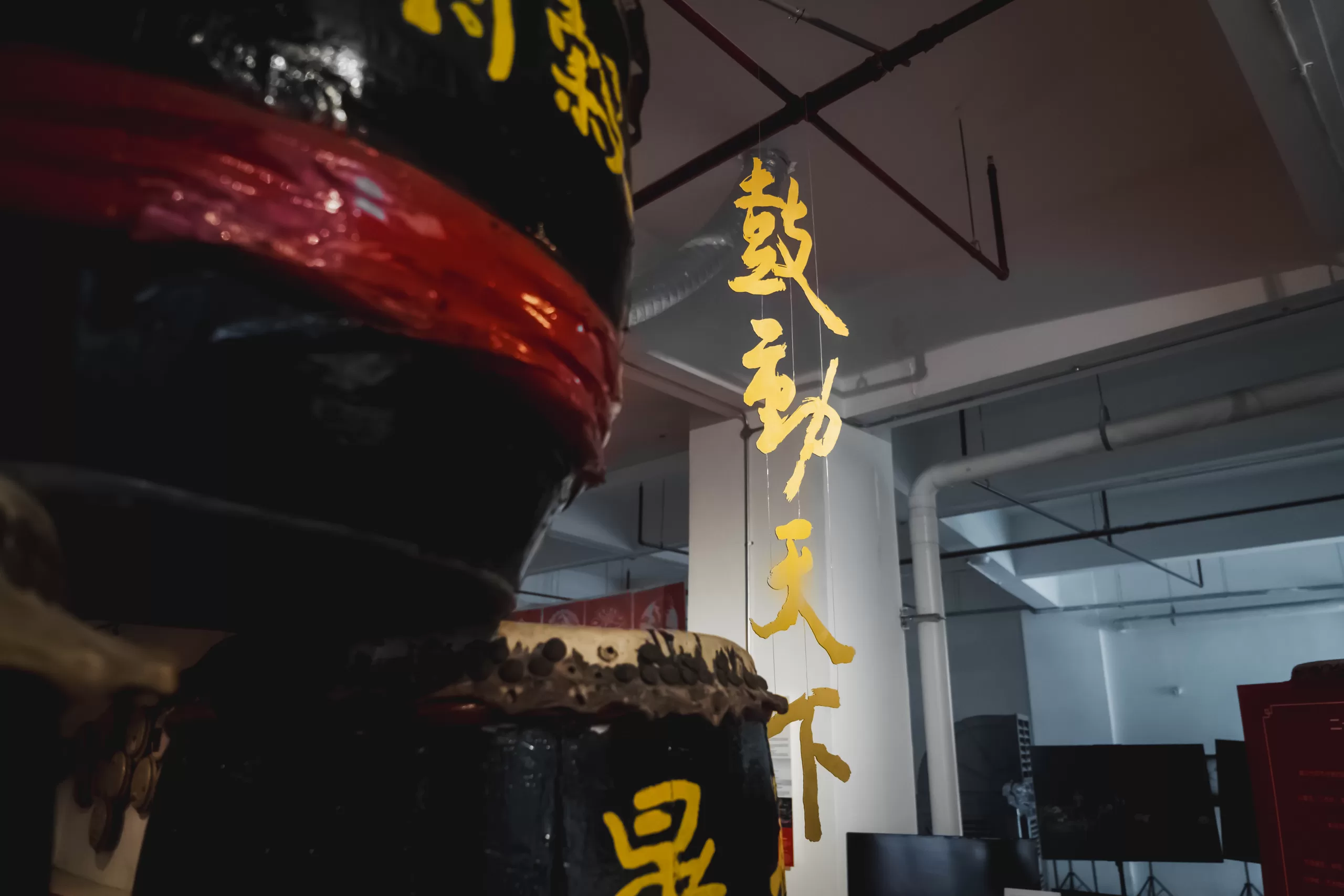
Next to the opera house, there was an exhibition on the Twenty-Four Festive Drums, tracing their origins, introducing the solar terms, and laying out the future vision of “Drum Up JB.” And there my friend Heng Yeh noticed that the exhibition panels were presented only in Chinese and English, with a complete absence of Bahasa Malaysia, which in its own way, exposed the cultural political position of the Festive Drums in this country. This omission becomes even more pronounced when the exhibition is attended by Chinese community leaders, local YBs, corporate sponsors, and a significant number of Malay “VIPs.” For a cultural practice that claims to be born in a multi-ethnic nation, how does its public narrative address the “absence of the Other”?
Has the Festive Drums, perhaps unconsciously, already accepted its role as a vessel for the memory of a single (Chinese) community?
Furthermore, when Drums: A New Beat Beckons is positioned as a resident show, the Twenty-Four Festive Drums is no longer “just” a performance. Once placed in the Permaisuri Zarith Sofiah Opera House and endowed with the functions of cultural diplomacy and city branding, the performance’s choices of language, narrative framework, and cultural representation have to be aware of its (national) cultural responsibility. If the linguistic interface remains limited to Chinese and English, the ambition for the Festive Drums to become “Malaysian culture” will inevitably lose its true potential for accessibility in a multi-ethnic society.
The resident performance’s home, “The R&F Princess Cove,” is a highly “artificial” and liminal enclave, which was not a naturally formed urban cultural space, but a hyperreal “cultural park”. Created through the collaboration of transnational (Chinese) real estate capital and royal power. Where there’s no organic flow of city life and the support of genuine community needs. In this context, transplanting the Festive Drums—a collective bodily craft born in/among communities, schools, and festive spaces—into this venue and attempting to activate the space through a resident show format is bound to encounter some structural tensions.
In reality, the space itself has not generated enough natural cultural demand, where the ticket pricing is not conducive to the return of the original community, and the opera house’s own codes of “spectatorship” might raise the threshold for entry. Thus, the Festive Drums becomes more easily shaped into a “cultural commodity for outsiders to consume.” This is not inherently problematic—after all, any highly symbolic cultural venue may move toward tourism, especially in a theatre that receives no state subsidy. But precisely because of R&F’s “un-local” positioning and location, the future target audience is likely to be Western travelers or Chinese expatriates, rather than the local community that grew up with the Festive Drums. Under these structural conditions, does Malaysia truly need another “House of Dancing Water”-style flagship for the Festive Drums? Or, more worryingly, will it end up as another “Encore Melaka”, becoming an inorganic cultural landscape?
To be clear, this is not to deny the necessity of bringing the Festive Drums into the theatre or onto the international stage. But there is a fundamental difference between independent performances and resident shows. When imagining the “future culture of Malaysia,” careful thought must be given to where the Festive Drums is situated, what kind of audience it gathers, and which communities it serves.
The absence of language, the narrative framework of the exhibition, the shift in audience perspective, and the hyperreal quality of the R&F space all point to the same core issue: what is the future cultural positioning of the Festive Drums? If the craft is to move beyond a Chinese-centric perspective and become a public culture in a multi-ethnic society, it needs more than just diverse symbols on stage or the inclusion of non-Chinese drummers. It requires a fundamental re-consideration of language use, narrative perspective, audience positioning, and choice of cultural venue. Only then can the Festive Drums, after 2025, truly cross the boundaries of ethnic culture, moving from “letting the Other see us” to “co-creating our cultural future with the Other.”
Conclusion
The foundational task accomplished by “Drum Up JB” in just two years is truly impressive. From community cultivation and cultural outreach to international exchange, experimentation with theatrical language, and the upgrading of visual storytelling, every step has been carefully and steadily taken. Drums: A New Beat Beckons itself proves they have a prominent level of maturity in staging, narrative completeness, and integration of multimedia technology. As a milestone in the thirty-plus-year history of the Twenty-Four Festive Drums, its significance hardly needs further elaboration.
Thus, precisely because of this, the structural issues that are still within the work stem from the intense scrutiny that its cultural position inevitably attracts.
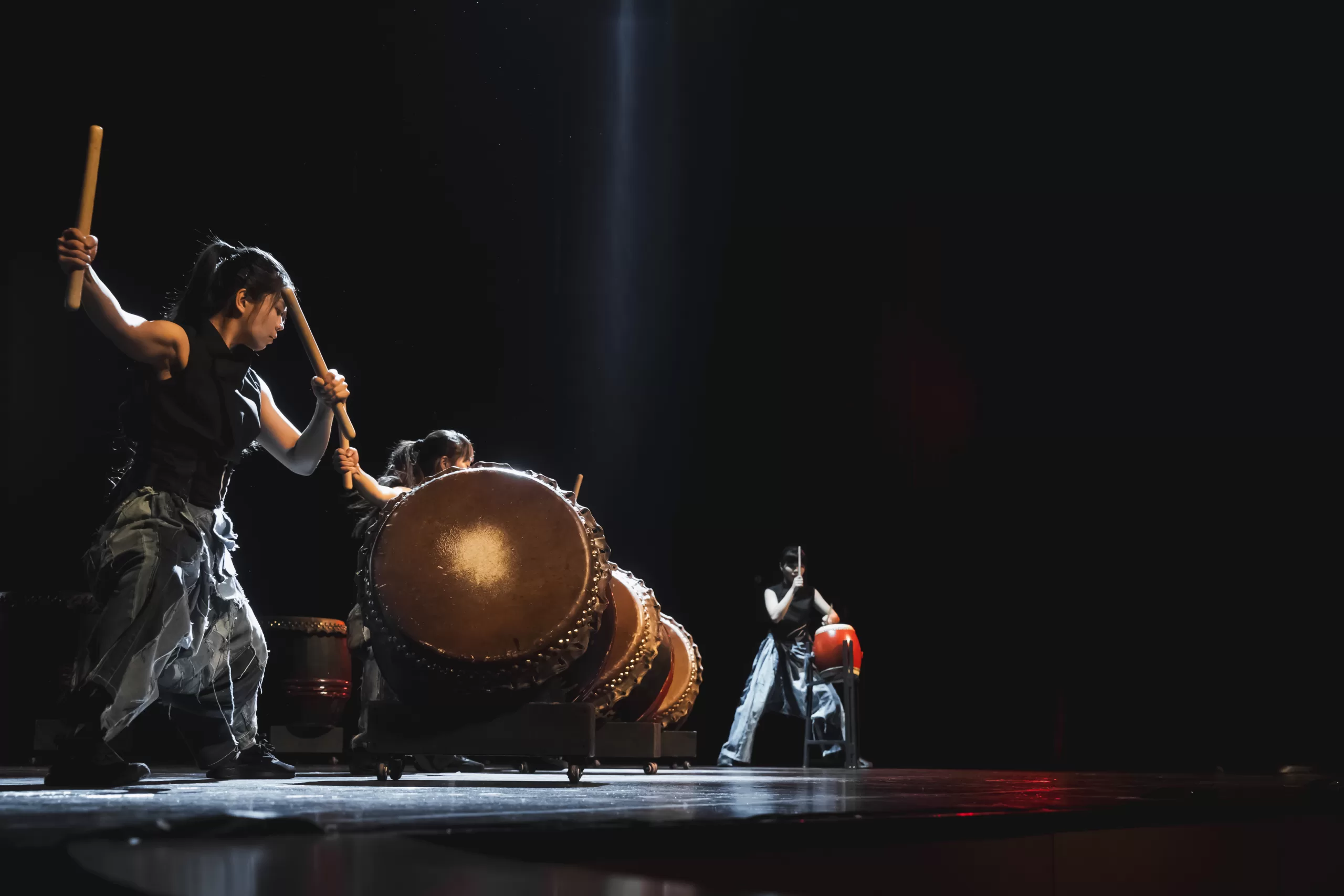
What has always fascinated me is the liminal state maintained by Orang Orang Drum Theatre. It is neither a purely conventional drum troupe nor a dramatic theatre company; instead, it continually tests, traverses, and returns between the two, extending the bodily vocabulary of the Festive Drums so that it can adapt to the rhythms of theatrical narrative, while still preserving the collective spirit of drumming and preventing it from becoming merely a technical appendage of the stage. This creative spirit that keeps hovering between different forms, between folk and contemporary, between communal memory and national imagination, is precisely what makes up the contemporary core value of the Twenty-Four Festive Drums.
Where the Festive Drums will go from here remains undecided.
What Drum Up JB 2.0: Drums: A New Beat Beckons has opened is a path that calls for more creators, more audiences, and more cross-cultural (and cross-disciplinary) dialogue:
How can local rootedness be maintained while expanding internationally?
How can acknowledgment of ethnic origins avoid falling into ethnic essentialism?
How can the Festive Drums not only re-cycle and re-produce memory, but also continue to create the future narrative?
These questions will not be answered today, nor are they only the concern of “Drum Up JB.” Only by allowing these questions to be continually discussed, debated, and repositioned in the public cultural sphere, can the cultural life of the Festive Drums truly become, as the program booklet says, “a practice that moves forward in change.” This completion is not seen as an endpoint, but will keep drawing strength from what remains unfinished, so that the drumbeats of more than thirty years may continue to open new chapters in an ever more complex Malaysia.
Drum Up JB 2.0: Drums: A New Beat Beckons (2025)
Production |Drum Up JB 2.0
Date|8:00pm, 14 Nov, 2025
Venue|Permaisuri Zarith Sofiah Opera House
Notes
* For full transparency: This article was originally written in Chinese and translated into English with the assistance of Copilot. The translation was then carefully revised and edited by myself and Heng Yeh. I’d like to share this process openly to acknowledge the role of AI in facilitating the first stage of translation, and to ensure readers are aware of the collaborative, technological, and ethical steps taken to present this work as accurately and thoughtfully as possible to the English readers.
[1] The English translation of “二十四節令鼓” (Twenty-Four Festive Drums) is not standardized, and the term “jie ling(节令)” is difficult to render precisely in English. While Malaysia’s Ministry of Unity, Culture, Arts and Heritage officially adopted “Twenty-Four Festive Drums” in 2009,[i] academic and popular literature also use variants such as “Twenty-Four Seasons Drums,”[ii] “Twenty-Four Jielinggu,”[iii] and “Twenty-Four Festive Drums.”[iv][v] According to Tan Chai Puan, the name emphasizes the festive and ritual significance of the drums, rather than simply “chiming.”[vi] Regarding the naming of the drums, it embodies the significance of festivals, which are intrinsically connected to the cultural elements of jieling. Hence, its Chinese name and the official English name are complementary to each other.[vii]
References: [i]-[vii]
[i] Peggy Loh, “24 Festive Drums’ Dramatic Art of Drumming,” Peggy Loh ~ My Johor Stories, September 15, 2016, accessed November 15, 2025, http://ppunlimited.blogspot. com/2016/09/24-festive-drums-dramatic-art-of.html.
[ii] Vincent Tee & Garry Kuan, “The Yin and Yang of 24 Season Drums for Physical and Musical Literacy among Medical Students: A Narrative Review,” Education in Medicine Journal 13, no. 2 (2021): 1-12, accessed November 15, 2025, https://doi.org/10.2131 5/eimj2021.13.2.1.
[iii] Soon Foon Lee, “Cultural Representation of Music and Performing Arts in Johor Old Temple’s Parade of Deities in Malaysia,” PhD diss., Universiti Putra Malaysia, 2018.
[iv] Leng Poh Gee, review of The Next, by Hands Percussion, Asian Theatre Journal 30, no. 2 (2013): 526-532, November 15, 2025, https://doi.org/10.1353/atj.2013. 0030.
[v] Siu, “Musicalbody,” 22.
[vi] Chai Puan Tan, interview by Yunxi Yang and Ow Wei Chow, May 10, 2022.
[vii] Yunxi Yang & Ow Wei Chow, “Twenty-Four Drums, Two Lands: Performing Glocalization of the 24 Festive Drums in Malaysia and China,” 音樂研究 40 (May 2024): 153-193. https://doi.org/10.6244/JOMR.202405_(40).04
[2] ibid: p165.
[3] https://heyzine.com/flip-book/eb22d021cd.html
[4] There are ongoing debates regarding the Chinese nomenclature of the Twenty-Four Festive Drums. While the term “jieling” (节令) is used in Malaysia to emphasize local cultural identity and the diasporic experience, some in China advocate for “jieqi” (节气, solar terms), referencing the traditional agricultural calendar. The founders and scholars in Malaysia firmly oppose renaming the drums as “Twenty-Four Solar Terms Drums,” arguing that “jieling” encompasses not only the seasonal cycles but also the unique local consciousness and linguistic diversity of Malaysian Chinese communities. The use of local dialects in performances is a vivid testament to this rootedness. Thus, although the drums were inspired by the twenty-four solar terms, “jieling” reflects a broader, de-diasporic cultural significance that cannot be reduced to agricultural timekeeping alone.
[5] ibid: p158.
[6] Kirshenblatt-Gimblett, Barbara. 2004. “Intangible Heritage as Metacultural Production.” Museum International 56(1–2): 52–65. https://doi.org/10.1111/j.1350-0775.2004.00458.x
[7] Picard, M., 1997. Cultural tourism, nation-building, and regional culture: The making of a Balinese identity. Tourism, ethnicity, and the state in Asian and Pacific societies, pp.181–214. https://scholarspace.manoa.hawaii.edu/bitstream/10125/24150/1/Picard%20-%20Tourism,%20Ethnicity.pdf#page=193
[8] Hafstein, Valdimar. (2009) “Intangible heritage as a list: from masterpieces to representation,” Intangible heritage. Taylor & Francis. https://doi.org/10.4324/9780203884973-10

Leave a Reply