
Loh Kok Man’s latest return to Animal Farm at Pentas 2, KLPAC, is less a simple revival than a reckoning. Staged in Mandarin with English surtitles, this new collaboration between Pentas Project Theatre Production and W Productions reintroduces George Orwell’s fable to a Malaysian audience already bruised by cycles of hope and disillusionment.
The result is a production that feels pointedly local even as it speaks in the universal language of power, fear, and forgetting.
Seventeen years after Loh’s first Animal Farm – which won him Best Director at the 7th BOH Cameronian Arts Awards and later toured to Taiwan – he returns to the material with a quieter, more reflective urgency.
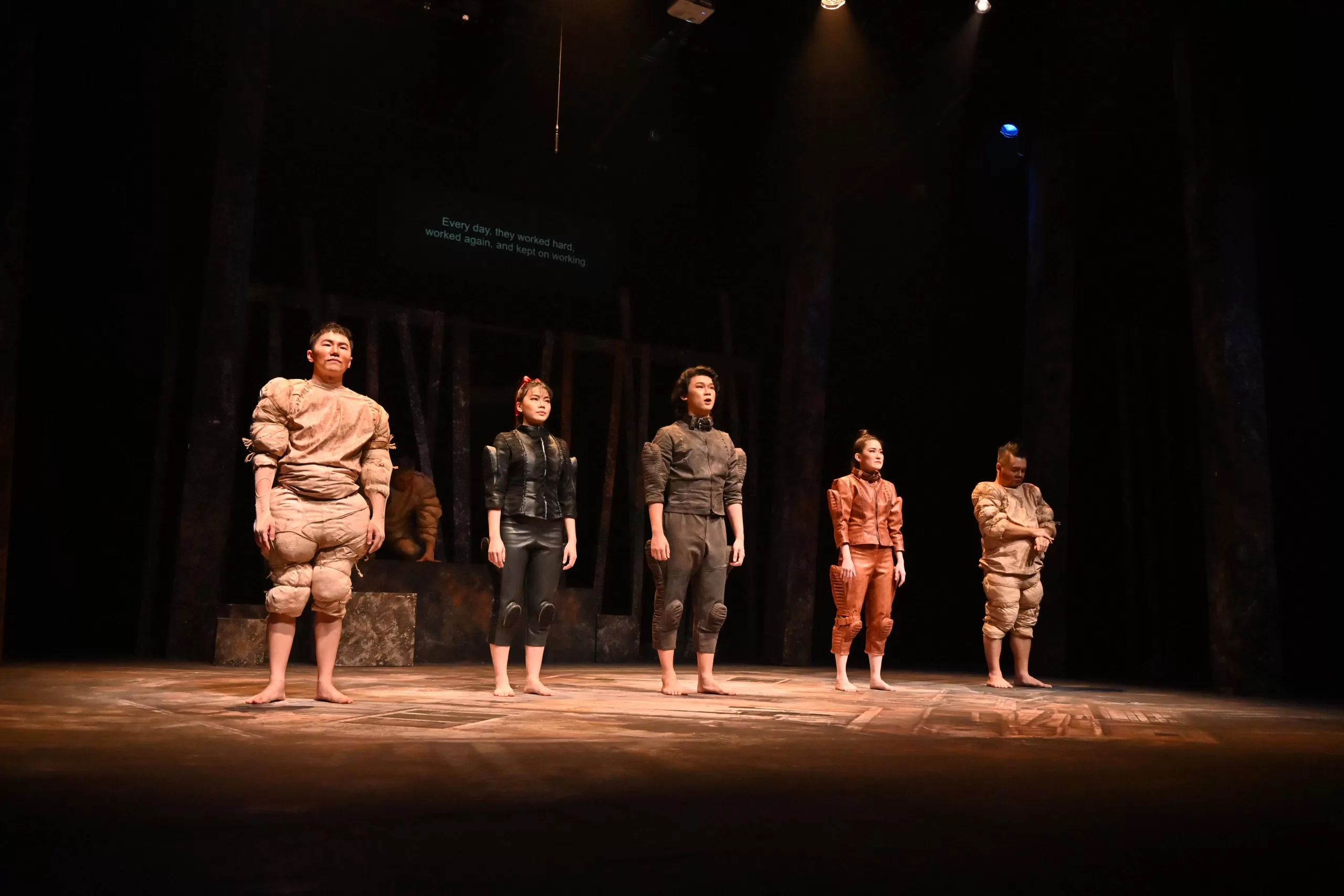
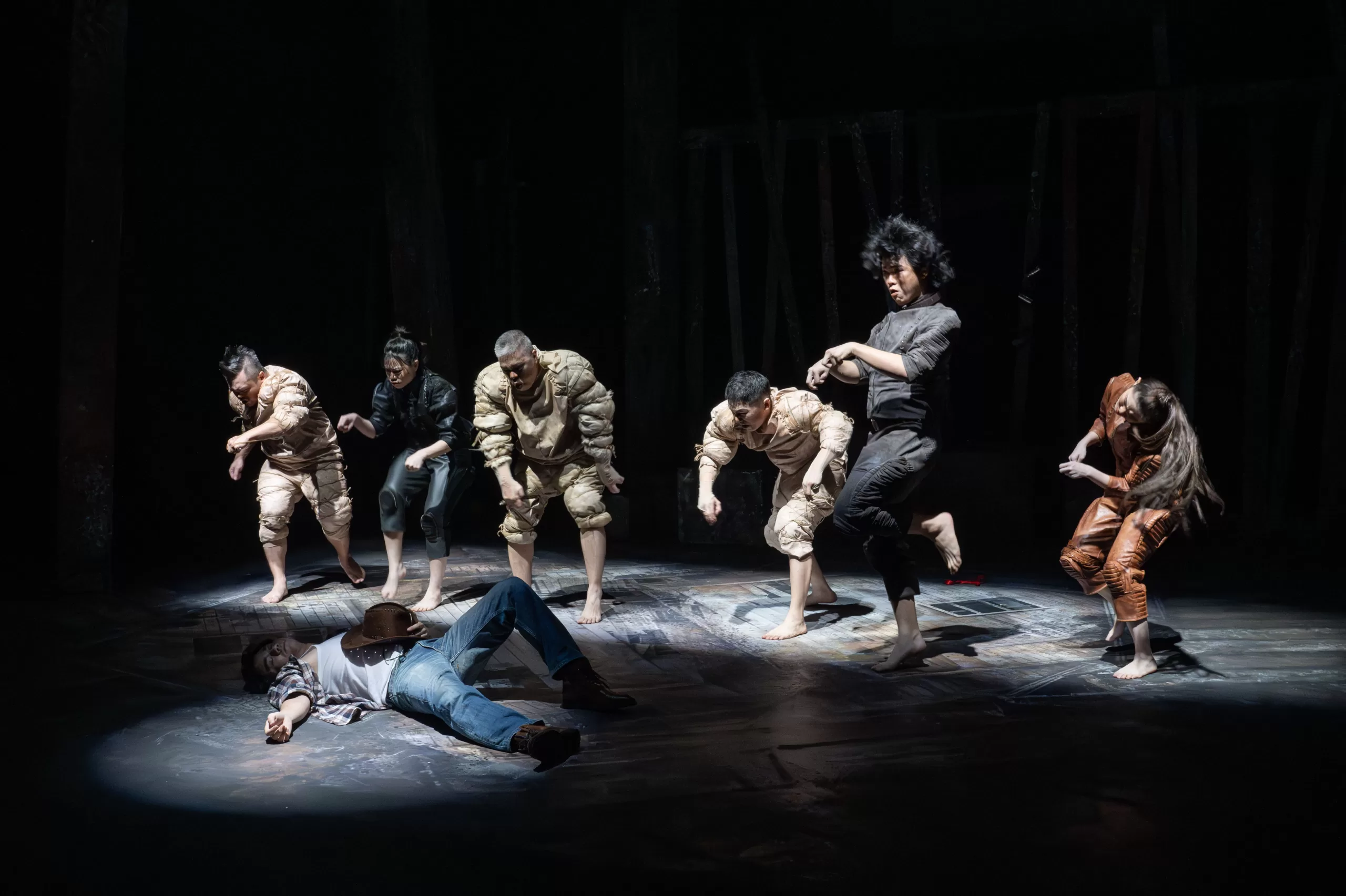
The staging leans on his hallmark blend of physical theatre and text-driven clarity: bodies carry as much meaning as dialogue, yet the storytelling remains lucid enough for first-time audiences to follow the farm’s descent into tyranny.
The Mandarin text, adapted by Tan Yan Tee and revised by Loh, lands with a crisp directness that underlines just how near these allegorical animals are to everyday Malaysians.
The six-strong ensemble – Anthony Lee, Seng Soo Ming, Zizi Hau, Yuanci Ng, JunYap Won and Jerry Pang – is asked to sustain two hours of constant transformation.
They respond with disciplined, deeply committed performances. Pang, in his professional debut as the tragic workhorse Boxer, is especially affecting; his open, guileless physicality makes Boxer’s blind faith in the pigs both recognisable and devastating.
Around him, the cast oscillates between grotesque caricature and sharply observed humanity, reminding us that the line between victim, collaborator, and oppressor is perilously thin.
A major engine of the production’s impact is Alu8’s live score. Stationed at the side yet sonically at the centre, he weaves electric guitar distortion with Guqin, didgeridoo and Bornean sape into a tense, shape-shifting soundscape.
The music rarely “illustrates” the action; instead it presses on it, turning moments of silence into something heavy and dangerous, and underlining how oppression can be felt in the body long before it is understood in the mind.
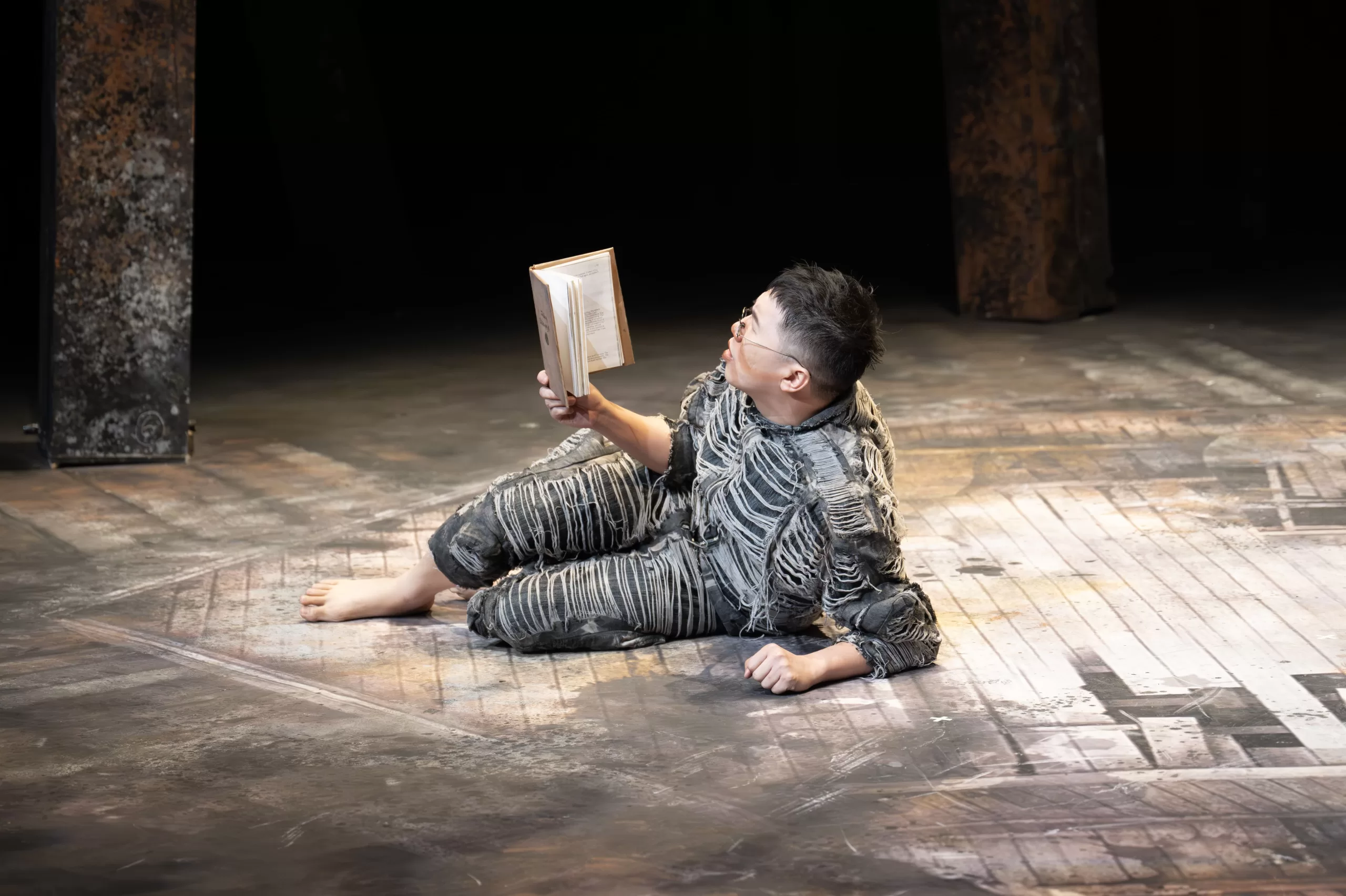
Supported by Weilin Chan’s functional set and Quito Neng’s costumes, Loh sculpts a world where every shadow and gesture feels complicit in the farm’s slow moral collapse.
What lingers after the lights fade is not outrage so much as unease. Loh’s directorial voice is no longer the fiery Snowball he once identified with; he now stands closer to Old Major, passing on a warning and a responsibility to a younger generation.
This Animal Farm doesn’t tell its audience what to think. It holds up a mirror and quietly asks, in Mandarin and in silence: now that you’ve seen yourselves, what will you do?
G.V. Aeria is becoming an avid listener of audiobooks of every genre as their vision diminishes with age. They are also very thankful for text-to-speech (and vice-versa) technologies.
This article is a result of ARTSEE.NET’s initiative to re-involve the warga emas among us in seemingly hip circles, and to invigorate intergenerational conversations of art and culture.
Leave a Reply